Customer Engagement
July 2026
What a Handcrafted Saddle Can Teach Us About Customer Engagement
This isn’t just another saddle. It’s a handcrafted piece of functional art, built by Janneman A. Pienaar—widely regarded as one of the finest saddle makers in the world. Before you’ve read another sentence, you’ve already formed an impression. You appreciate the quality. You notice the details. You sense the care that went into creating it.
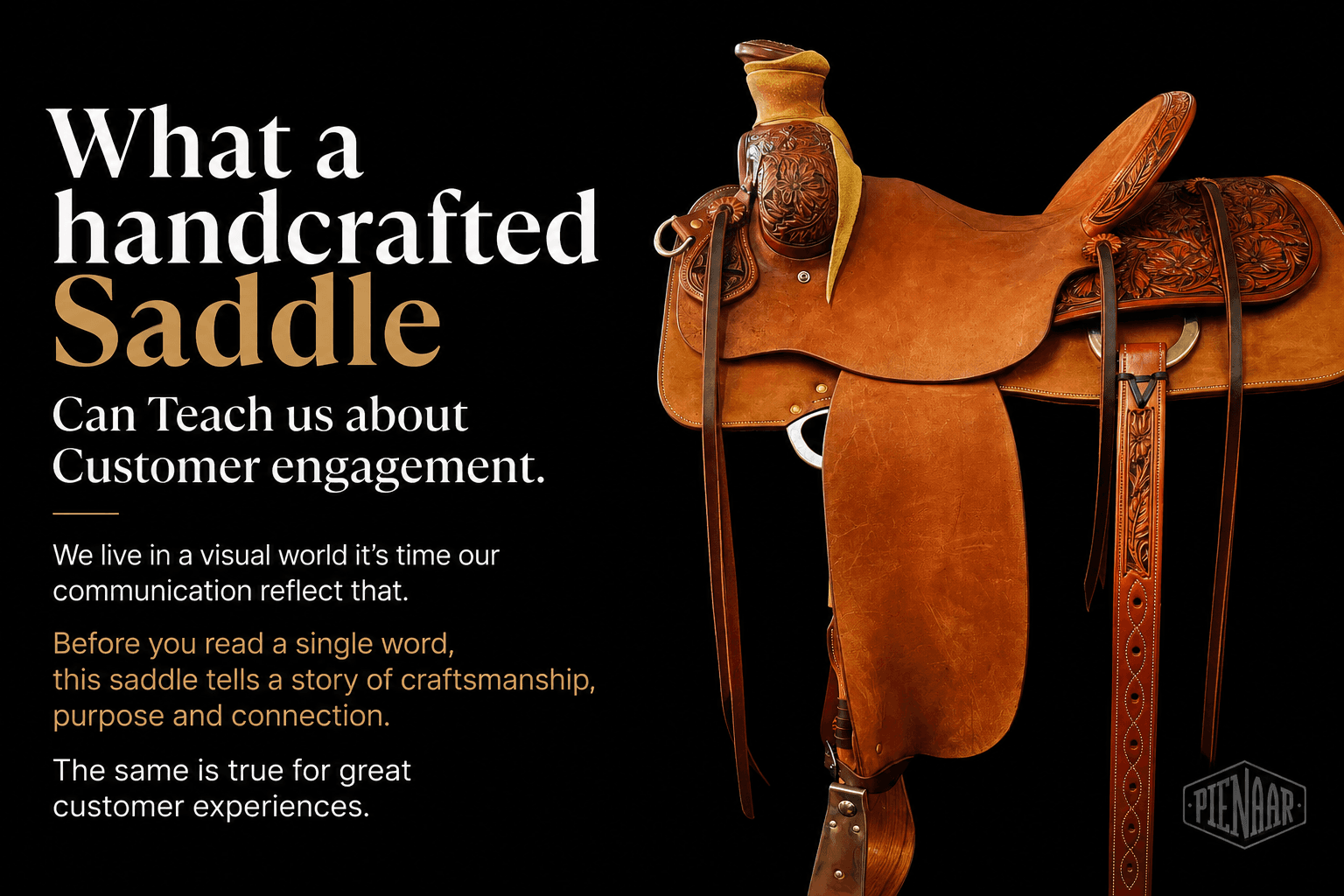
I could spend several paragraphs describing this saddle.
I could tell you about the premium leather, the flawless stitching, the precision of its construction, the balance, the craftsmanship, and the decades of expertise behind every detail.
Or…
I could simply show you the picture.
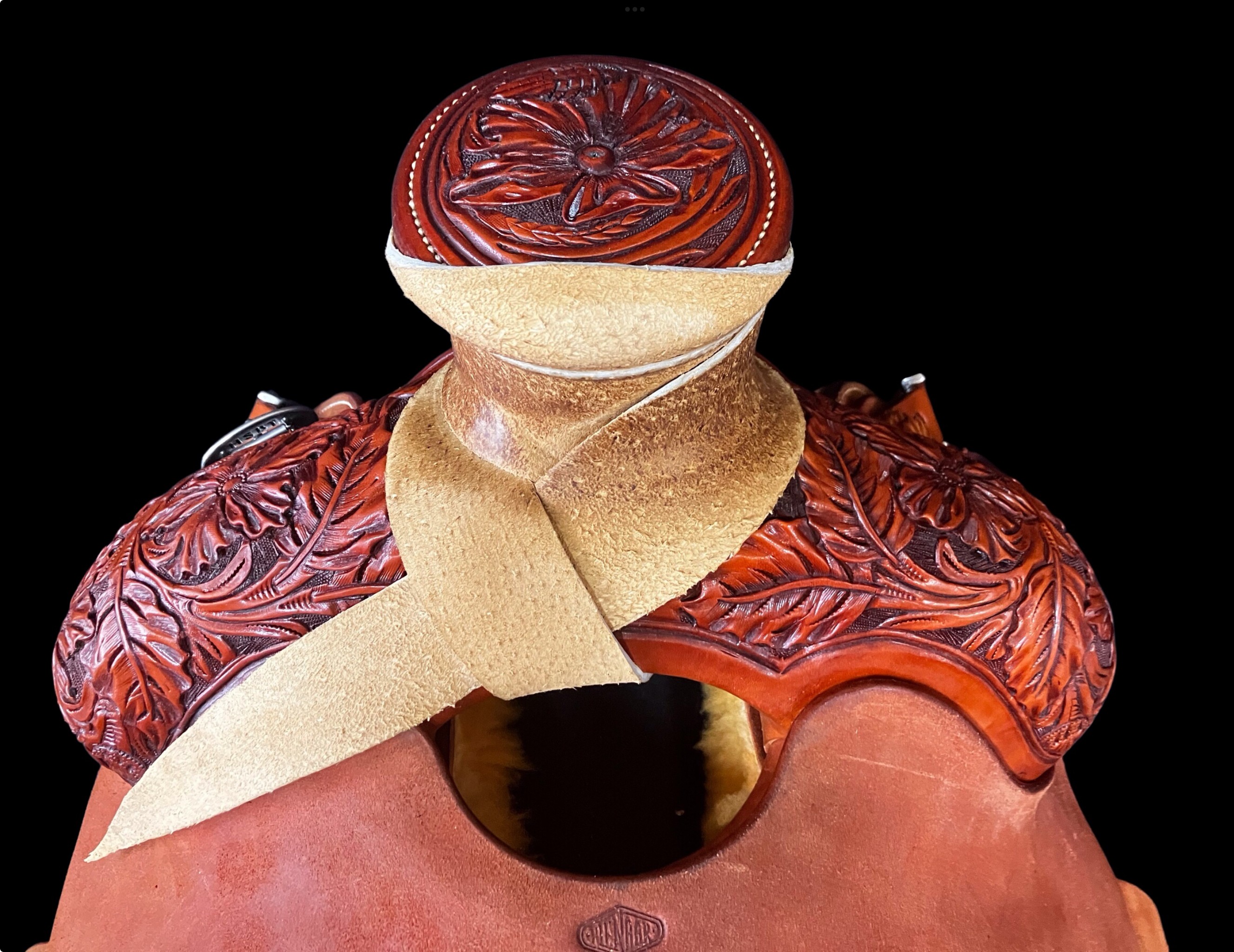
Immediately, you understand something words struggle to convey.
You notice the lines. The texture. The symmetry. The attention to detail. Even if you’ve never ridden a horse, you can appreciate that this is something special.
This isn’t just another saddle. It’s a handcrafted piece of functional art, built by Janneman Pienaar; widely regarded as one of the world’s finest saddle makers.
Before you’ve read another sentence, you’ve already formed an impression.
That’s the power of visual communication.
Pictures don’t just illustrate a story.
They become the story.
And that’s exactly what’s happening in customer engagement today.
We’ve Entered a Visual-First World
For generations, businesses communicated primarily through words.
Today, consumers communicate differently.
Photos.
Video.
Voice.
Emojis.
Short-form content.
Interactive experiences.
Visual communication isn’t just another content format—it’s becoming our contemporary language.
Think about your own day. Before breakfast, you’ve probably watched videos, glanced at dozens of images, and exchanged messages that contained far more than text.
We don’t just read anymore.
We experience.

Yet Many Brands Still Speak Yesterday’s Language
Despite this shift, many companies continue to communicate with customers using text-heavy emails, static websites, lengthy app experiences, and SMS messages designed to inform rather than engage.
Meanwhile, consumers have evolved.
They’re scrolling. Watching. Swiping. Tapping. Conversing.
Brands are often speaking one language while customers are speaking another.
Mobile Changed the Rules
The smartphone isn’t just another channel.
It’s become the primary place where relationships between brands and consumers are built.
But here’s the mistake many organizations make:
They assume mobile is simply a smaller desktop.
It isn’t.
Mobile has its own language.
It favors imagery over explanation.
Motion over static content.
Conversation over navigation.
Moments over manuals.
People don’t interact with their phones the way they interact with a laptop. They’re standing in line for coffee. Waiting to board a flight. Watching their child’s soccer practice. Sitting on the couch while half-watching television.
Every interaction is measured in seconds.
The brands that succeed understand this.
Rich Media Creates Richer Relationships
Imagine receiving a hotel confirmation that consists of three paragraphs of text.
Now imagine receiving a personalized mobile experience with beautiful imagery, a welcome video, weather, directions, dining recommendations, and the ability to ask questions—all inside a single conversation.
Both communicate information.
Only one creates emotion.
Only one builds anticipation.
Only one strengthens the relationship.
That’s the difference between delivering information and creating an experience.
Craftsmanship Matters
What makes a saddle like this extraordinary isn’t simply the leather.
It’s the intentionality behind every decision.
Every stitch.
Every contour.
Every piece of hardware.
Every detail exists to create a better experience for both horse and rider.
The best customer experiences should be crafted with that same level of purpose.
Every image should have meaning.
Every video should serve a purpose.
Every interaction should feel personal.
Every conversation should strengthen trust.
Technology alone doesn’t create memorable customer experiences.
Thoughtful design does.
The Future Belongs to Brands That Speak the New Language
Technologies like RCS, conversational AI, rich messaging, personalization, and interactive commerce aren’t exciting because they’re new.
They’re exciting because they allow brands to communicate the way people naturally communicate today.
Visually.
Conversationally.
Personally.
Emotionally.
The organizations that embrace this shift won’t simply improve click-through rates or engagement metrics.
They’ll build stronger customer relationships because they’ll be speaking the language their customers already understand.
Back to the Saddle
I could have spent this entire article describing the craftsmanship of Janneman Pienaar's work.
Instead, I showed you a picture.
And chances are, the picture told you more than my words ever could.
That’s the lesson.
The future of customer engagement isn’t about sending more messages.
It’s about creating experiences that people can see, feel, and remember.
Because in a mobile-first world, pictures and video aren’t enhancements to communication.
They are the language.
And the brands that learn to speak it fluently won’t just earn attention.
They’ll earn trust.